Alpaca Mammals Animal Illustration: A Designer's Guide
That gentle, slightly goofy face. The impossibly soft-looking fleece. The calm, curious eyes. There's a reason alpacas have captured the hearts of designers and audiences alike. An Alpaca Mammals Animal Illustration isn't just a picture of an animal; it's an injection of warmth, approachability, and a touch of whimsy into any project. As a creative professional, I've seen firsthand how a single, well-crafted asset can transform a layout, and a high-quality alpaca illustration is one of the most versatile tools in that arsenal. This isn't about fleeting trends; it's about leveraging a universally appealing character to build connection and visual interest.
The Anatomy of a Great Alpaca Illustration
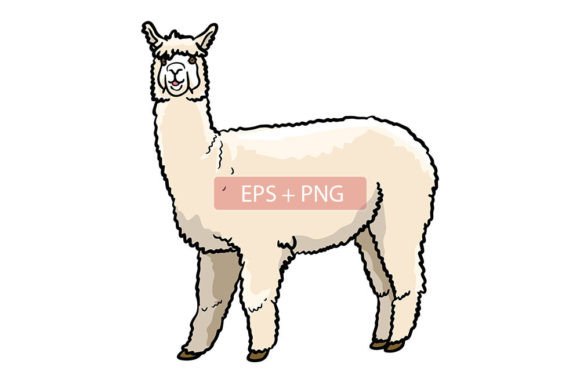
What separates a forgettable animal graphic from one that truly works? It comes down to personality and technical quality. A premium Alpaca Mammals Animal Illustration, like the one described in this package, succeeds because it balances character with professionalism. Visually, the best versions capture the alpaca's distinctive features—the elongated neck, the expressive face, and the textured fleece—without becoming overly realistic or cartoonish. The style often leans into a modern, flat design aesthetic with clean lines and a limited, pleasing color palette. This makes it feel contemporary and adaptable, rather than childish or dated.
The personality is key. A great alpaca illustration conveys a sense of gentleness, curiosity, and reliability. It's friendly without being saccharine, and detailed enough to hold interest in a complex design. This balance is what makes it suitable for such a wide range of applications, from a kindergarten classroom poster to a sophisticated brand mascot for a sustainable clothing line. The included vector file (EPS) is non-negotiable for serious work. It allows you to scale the illustration to any size—from a tiny favicon to a massive banner—without losing a single pixel of clarity. The high-resolution PNG file provides immediate, ready-to-use quality for digital projects.
Where This Illustration Truly Shines: Practical Applications
Let's move beyond theory. Where do you actually use an Alpaca Mammals Animal Illustration to get the best results? The applications are broader than you might initially think, spanning both commercial and personal projects.
- Brand Identity & Logo Design: For businesses in children's apparel, organic products, artisan crafts, or any brand wanting to project warmth and authenticity, an alpaca can be a powerful mascot. It works beautifully as a central logo element or as a secondary brand mark used on packaging, hang tags, and social media profiles.
- Editorial & Publishing Design: Magazine articles about sustainable living, children's book covers, blog headers for travel or parenting sites, and infographic illustrations gain immense character. The alpaca can act as a friendly guide, breaking up text and making complex information more approachable.
- Packaging & Product Design: Think outside the box. This illustration is perfect for product labels (teas, yarns, snacks), sticker sheets, greeting cards, and notebook covers. It adds a tactile, handmade feel that resonates with consumers looking for authenticity.
- Digital & Web Design: Website heroes, email newsletter headers, social media post graphics, and even custom emojis or GIFs. The friendly face increases engagement and makes digital spaces feel more human and inviting.
- Craft & Personal Projects: For hobbyists, the vector file opens up a world of possibilities for die-cutting, embroidery patterns, custom stationery, and party decorations. The commercial license often included in such packages allows for selling finished products made with the asset.
Integrating the Asset: Font Pairings and Visual Hierarchy
An illustration doesn't live in isolation. Its power is magnified by the typography and layout surrounding it. The playful, organic nature of an Alpaca Mammals Animal Illustration pairs best with typefaces that complement its personality without competing.
For headings, consider a clean, bold sans serif font or a display font with a touch of warmth—perhaps one with slightly rounded terminals. Avoid overly rigid, geometric sans serifs that might feel cold next to the illustration. If the alpaca is part of a more rustic or artisanal brand, a handwritten font or a script font with good readability could work for short titles. The key is to create a font pairing where the type and illustration feel like they belong to the same family.
Body copy should prioritize readability. A neutral, well-spaced sans serif font or a classic, legible serif font will provide a stable foundation, allowing the illustration to be the star. This establishes a clear visual hierarchy: the alpaca draws the eye and sets the tone, the headline provides context, and the body text delivers the information. This thoughtful integration is what elevates a project from a simple collage to a cohesive piece of design.
A Practical Checklist for Choosing and Using Your Illustration
Before you commit to using any animal illustration asset, run it through this quick evaluation:
- Assess the Style Fit: Does the illustration's style (flat, textured, realistic, cartoonish) align with your project's overall aesthetic? A modern typography-driven layout might clash with a highly detailed, vintage-style animal drawing.
- Check the File Formats: Ensure you have both a vector file (like EPS or AI) for scalability and editability, and high-resolution raster files (like PNG) for immediate use. The package described here covers both bases perfectly.
- Test the Pairing: Don't just imagine it. Place the illustration next to your chosen typefaces. Does it feel harmonious? Does the illustration's "voice" match the "voice" of the fonts? A playful alpaca next to a severe, corporate sans serif creates dissonance.
- Evaluate Readability: If the illustration is part of a logo or lockup, ensure the text remains legible at small sizes. Sometimes, simplifying the illustration or adjusting spacing is necessary.
- Review the License: For any commercial project—from client work to selling products on Etsy—the license must allow for commercial use. Most premium asset packages include this, but it's your responsibility to verify.
Ultimately, a well-chosen Alpaca Mammals Animal Illustration is more than a decorative element. It's a strategic design asset that can define a brand identity, enhance editorial design, and create a memorable point of connection with your audience. Its strength lies in its ability to convey complex emotional cues—warmth, trust, creativity—instantly and universally. By pairing it thoughtfully with strong typography and integrating it into a clear layout, you leverage its full potential to create work that is not only beautiful but effective.